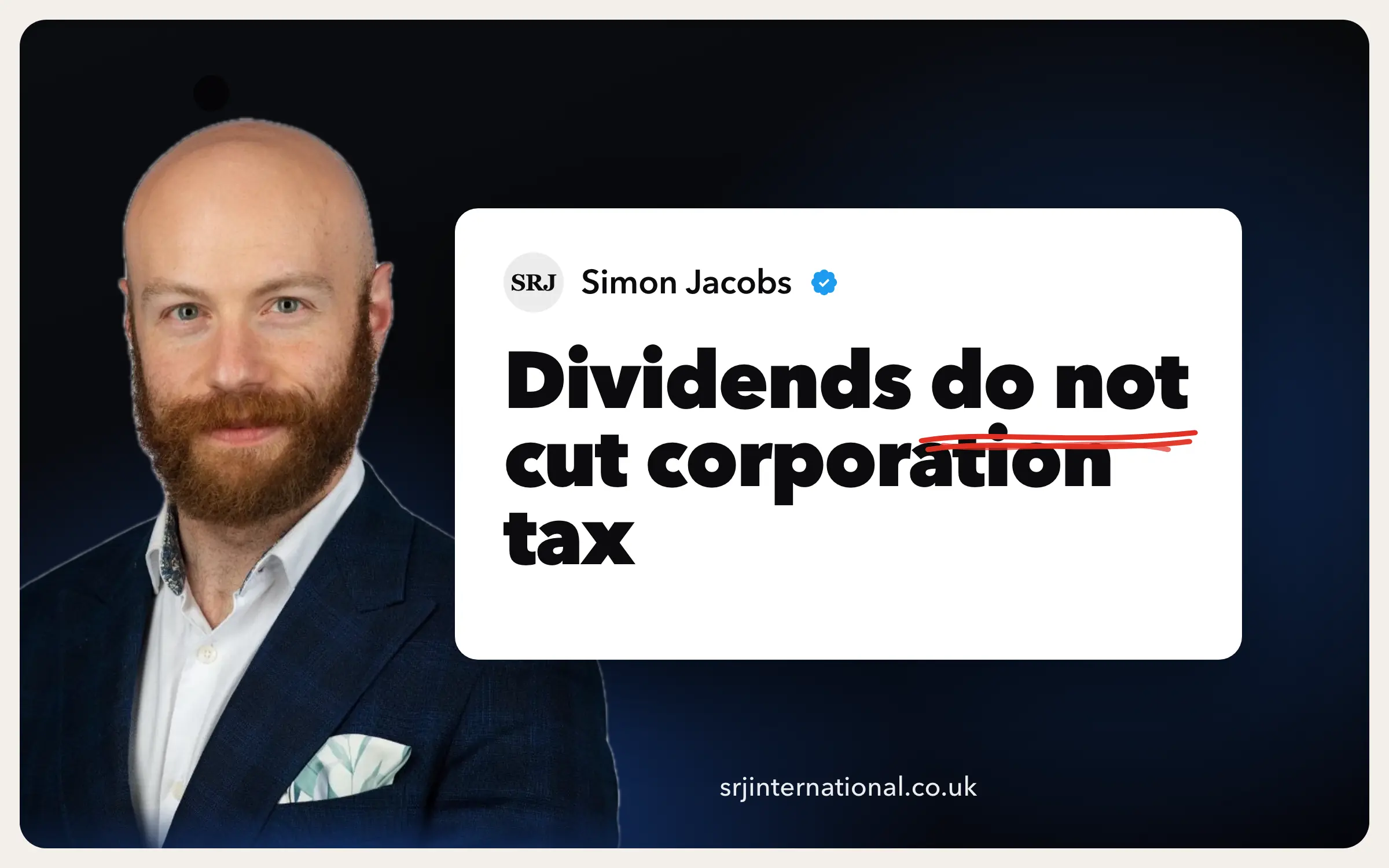
In short: Legitimate ways a UK marketing agency can bring its corporation tax bill down, what actually reduces taxable profit, and why dividends do not.
Corporation tax is charged on your agency's profit, not its turnover, and what you pay comes down to how cleanly that profit is worked out. There is no clever trick here, but there is a lot of ordinary ground that founder-led agencies leave on the table. Here is what genuinely reduces the bill, and what does not.
Is corporation tax still 25% in the UK?
Partly. The main rate is 25%, but it applies to profits over £250,000. Companies with profits under £50,000 pay the small profits rate of 19%, and profits in between are eased in through marginal relief. So most small and mid-sized agencies pay an effective rate somewhere between 19% and 25%, not a flat 25%. See the current Corporation Tax rates.
What actually reduces corporation tax
Corporation tax falls when your taxable profit falls, and taxable profit falls when you claim every legitimate business cost. For an agency that usually means salaries and employer National Insurance, software and subscriptions, contractor and freelancer costs, and the everyday running costs of the business. The expenses your agency can claim are the first place to look, because a missed cost is simply tax overpaid.
Employer pension contributions
Contributions your company pays into a director's or employee's pension are generally an allowable business expense, so they reduce taxable profit while moving money into your own pension. For agency owners taking profit out, it is one of the more efficient routes, within the annual rules. See pension tax relief. How much makes sense depends on your position, so we look at your numbers.
Do dividends reduce corporation tax?
No, and this catches a lot of founders out. Dividends are paid out of profit after corporation tax has already been charged, so they are not a deductible expense and do not lower the corporation tax bill at all. Salary reduces it, dividends do not. Getting the salary and dividend split right is about your overall tax, not your corporation tax.
How much corporation tax on £100,000 profit?
As an illustration only, £100,000 of profit sits in the marginal band, so the effective rate lands between the 19% and 25% figures rather than at either end. The exact number depends on your accounting year, any associated companies, and what has genuinely been claimed as a cost first. That is why we work it out from your actual accounts, not a headline rate.
Where the saving actually comes from
The real savings come from planning the year instead of reacting at the end of it: claiming what you are due, timing equipment purchases, and deciding how profit leaves the business before the money moves. If you want this applied to your agency, see how we work or read our three tax moves for agency owners. Rules and thresholds change, so this is general information, not advice for your company, and the right figure always comes from your actual numbers.
Common questions
You reduce it by lowering taxable profit legitimately: claiming every allowable business cost, paying salaries and employer pension contributions, and timing equipment purchases. Dividends do not help, because they come out of post-tax profit. The dependable savings come from planning the year rather than a year-end scramble, applied to your own numbers.
Allowable costs incurred wholly and exclusively for the business: salaries and employer National Insurance, contractor and freelancer fees, software, professional fees, and employer pension contributions, among others. Capital allowances cover equipment. What qualifies depends on your setup, so we check your specific costs against the current rules rather than assuming.
No. Dividends are paid from profit after corporation tax, so they are not a deductible expense and do not lower the corporation tax bill. Salaries and employer pension contributions do reduce it. Dividends affect your personal tax, not the company's corporation tax, which is a common and costly mix-up.
25% is the main rate, but it applies to profits over £250,000. Profits under £50,000 are taxed at the 19% small profits rate, and profits in between are eased in through marginal relief. Most small and mid-sized agencies therefore pay an effective rate between 19% and 25%.
Related reading




Simon Jacobs is a Chartered Tax Adviser (CTA · ACA) and PwC trained, founder of SRJ International. He advises UK business owners on tax, profit extraction and exit. Read his full profile →