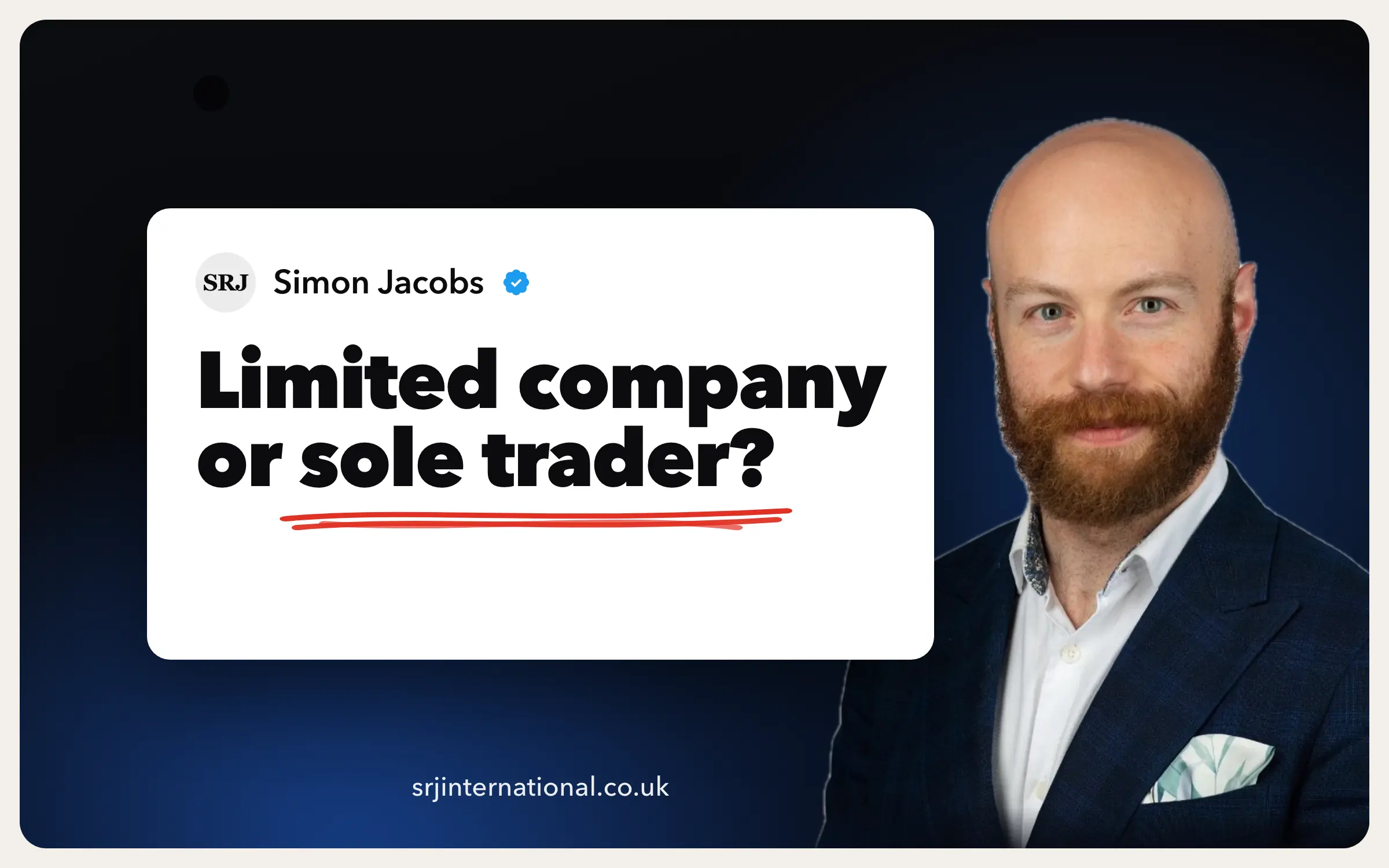
In short: If you draw every pound the business makes, a limited company often leaves you with less take-home than a sole trader on the same profit. Its advantages lie in liability and retained profit.
If you need all the money your company makes for yourself personally, setting up a limited company probably isn't the tax win you think it is.
How do the two structures compare on £100k of profit?
Let's say your company makes £100k a year after expenses, before you've paid yourself anything.
If you need all of that to live on, your mortgage, holidays, meals out, clothes, the lot, here's how the two structures compare:
- Limited company. Through a mix of salary and dividends, you'll take home roughly £65k after tax and National Insurance.
- Sole trader. On the same £100k, you'll take home roughly £69k after tax and National Insurance.
That's around £4k more in your pocket as a sole trader, on the same income.
Those figures are in line with the rates published for the 2026 to 2027 tax year.
Why does the limited company come out lower?
The money is taxed in two stages. HMRC's guidance is that a company pays Corporation Tax on its profits: 19% where profits are £50,000 or less, 25% where they are more than £250,000, and the main rate reduced by Marginal Relief in between. Dividends are then taxed in your hands, at 10.75% in the basic rate band and 35.75% in the higher rate band for 2026 to 2027, above a £500 allowance. Any salary carries employer National Insurance at 15% above £5,000 a year.
A sole trader's profit is taxed once. It is charged to Income Tax through Self Assessment, at 20% in the basic rate band and 40% in the higher rate band, with Class 4 National Insurance at 6% on profits over £12,570 up to £50,270 and 2% above that. HMRC's guidance says that where profits are £7,105 or more, Class 2 contributions are treated as having been paid.
| Point | Sole trader | Limited company |
|---|---|---|
| Liability | Personally responsible for all the debts of the business | Owners responsible for business debts only up to the value of their investment |
| Tax on profit | Income Tax through Self Assessment | Corporation Tax on the company's profits |
| National Insurance | Depends on your profits | Depends on how you take money out |
| Taking money out | You keep all the profits after paying tax | Rules to follow for salary, dividends or a director's loan |
Is a limited company still worth setting up?
There are still good reasons to set up a limited company, liability protection, asset protection, and being able to reinvest profits tax-efficiently among them.
HMRC's guidance describes limited liability as owners being responsible for business debts only up to the value of their financial investment, and says a company is legally separate from the people who own it. The case for keeping profit inside a company is set out in sole trader or limited company for a side hustle.
But if your plan is to extract everything the company makes, don't assume it's automatically saving you tax, because for take-home income alone, it often isn't.
How much do you actually need to take out?
Worth asking yourself instead:
How much do you actually need to live on personally?
A surprising number of "personal" costs can legitimately be paid through the company.
But you won't know which ones until you've had that conversation with a tax adviser.
One example HMRC publishes is the trivial benefits exemption, covered in trivial benefits for staff and directors. For the split itself, see how much a founder should pay themselves.
Rates, allowances and thresholds change each year and the comparison depends on your own profit and plans, so this is general information rather than advice on which structure suits you. If you want both routes compared on your own figures, talk to us.
Common questions
HMRC's guidance says the business structure you choose can affect the way you pay tax and your legal responsibilities. A sole trader pays Income Tax on profits through Self Assessment, while a company pays Corporation Tax on its profits and directors may pay Income Tax depending on how they take money out. See [Set up a business](https://www.gov.uk/set-up-business).
If your profits are more than £12,570 a year you pay Class 4 contributions: 6% on profits over £12,570 up to £50,270 and 2% on profits over £50,270. If your profits are £7,105 or more, Class 2 contributions are treated as having been paid. See [Self-employed National Insurance rates](https://www.gov.uk/self-employed-national-insurance-rates).
The small profits rate of 19% applies where profits are £50,000 or less and the main rate of 25% applies where they are more than £250,000. A company with profits between those limits may be entitled to Marginal Relief, which gives a gradual increase between the two rates. See [Corporation Tax rates](https://www.gov.uk/corporation-tax-rates).
No. HMRC's guidance says a sole trader is personally responsible for all of the debts of the business, which is called unlimited liability. Owners of a limited company are responsible for business debts only up to the value of their financial investment. See [Set up a business](https://www.gov.uk/set-up-business).
Related reading

Simon Jacobs is a Chartered Tax Adviser (CTA · ACA) and PwC trained, founder of SRJ International. He advises UK business owners on tax, profit extraction and exit. Read his full profile →